

I swear, dogs have a special talent for making us feel understood.
I don’t know about yours, but mine starts staring straight into your eyes, head slightly tilted, and looks at you like he’s saying, yes, I get it, keep talking.
And of course, since we love them, we take that moment to keep chatting as we do with humans.
Everyone knows that dogs can actually understand something we talk to them.
But how much do they actually understand, and how many words can they recognize and memorize?
Dogs do not understand language like humans do

This is the part people sometimes do not love, but it’s important. Dogs are not translating sentences in their heads the way people do.
Dogs are reading patterns. They are listening for specific sounds that have mattered before.
They’re also great at constantly watching body language and tracking tone.
That doesn’t mean they understand nothing. It means their understanding is different. It is more practical, more emotional, more linked to outcomes.
When a dog hears a familiar word, the brain can light up in a way that suggests recognition, especially if the word has been consistently connected to something real.
You can try this with your dog if, for example, you mention a toy, a walk, a person or food. It usually always work with food!
What dogs really hear when humans talk

Let me now go to the funniest, because it explains so much.
As we’ve seen, humans speak in full paragraphs, while dogs tend to latch onto key words and cues.
So the human says:
“After I finish this email, we are going to go outside for a nice long walk, ok, just give me ten minutes.”
The dog hears:
“Walk. Outside. Ok.”
And the dog has already emotionally moved to the next scene.
This also explains why it feels like a dog can understand the whole conversation. They respond at the right time because they catch the important pieces.
The rest they fill in with context, and dogs are insanely good at context.
If the leash is in your hand, the meaning is obvious. If the treat jar opens, the meaning is obvious. If shoes go on, the meaning is obvious.
The important thing we have to understand is that dogs basically interpret the entire situation, not just the words.
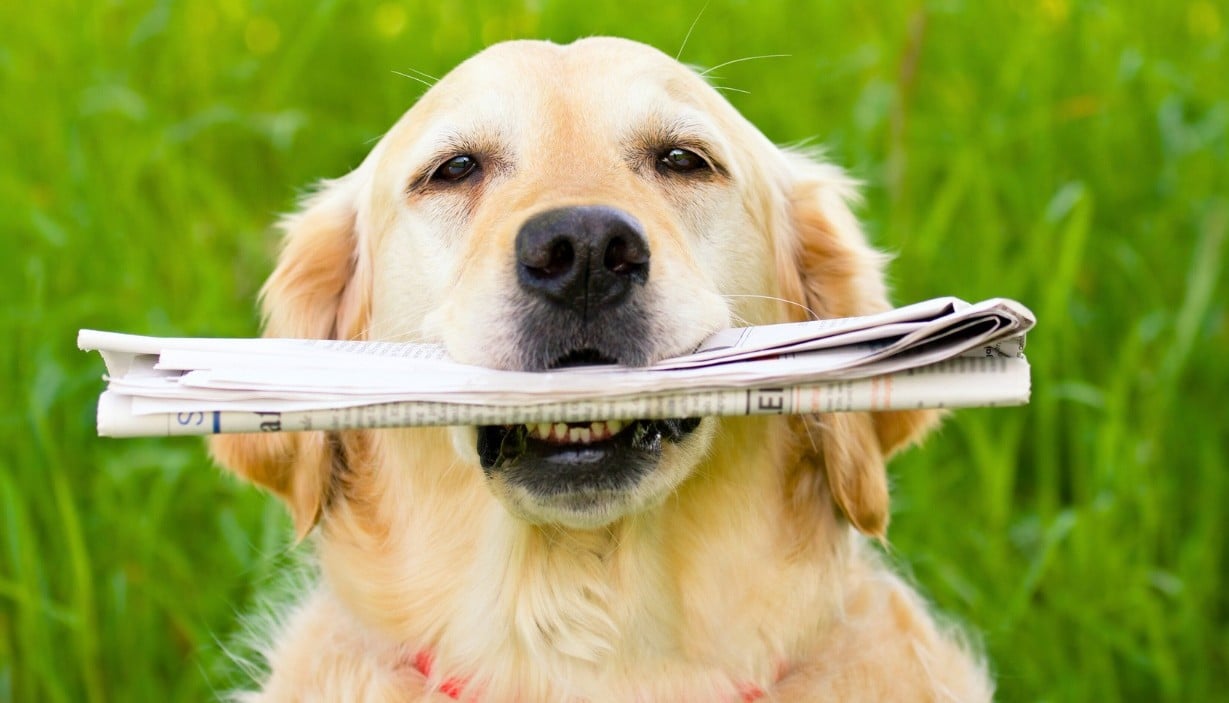
So how many words can dogs actually recognize

Most dogs can learn at least a handful of words, and many can learn dozens. But some of the smartest breeds can learn a lot more than that.
A typical family dog, with consistent training and regular interaction, might recognize around 50 words.
That usually includes words like sit, stay, down, come, off, wait, treat, walk, car, park, dinner, outside, plus names of people, plus names of toys, plus random household phrases that happen a lot.
Then there are the super dogs who learn hundreds of words. Real examples exist where dogs have shown the ability to recognize the names of many objects and fetch the correct one.
But here is the thing. Word count is not the only measure of understanding.
A dog that knows 25 words really well and uses them consistently can feel more “conversational” than a dog that has heard 200 words but does not have clear associations for them.
It’s like when humans learn foreign languages. Learning vocabulary without associations is pointless. Clarity always beats quantity.
What counts as a word to a dog
When people say “my dog knows 100 words,” I always want to ask what they mean by “knows.”
Because dogs can “know” a word in different ways.
Some words are commands, where the dog understands that the sound is linked to an action. Sit means do this with the body.
Some words are labels, like ball, squirrel, or grandma. Those are nouns in a dog’s brain, kind of like mental sticky notes.
Some words are emotional signals, like “good boy” or “no.”
The dog might not understand the grammar of it, but they understand the message.
Some words are routines, like “bedtime” or “let’s go.” The dog connects it to a sequence of events.
So if a dog hears “Do you want to go for a walk,” they may not grasp the sentence structure, but they grasp the routine and the key sound. Walk is the spark, and the routine is the fire.
Tone matters a lot, sometimes more than the word
The last very important thing I wanna add is that in all this, the tone is extremely important.
Keep in mind that dogs are tuned to tone. They can tell excitement, anger, softness, stress. They can even tell when someone is pretending to be calm but is not calm.
They can tell when someone is sad even if the person is smiling, especially if it is a member of their family whom they know well.
They often pick up on sadness even when a person is smiling, especially if it’s someone they know well.
This is one of the reasons certain small behaviors can slowly affect the relationship without us realizing it.
Things that seem harmless to us can feel confusing or stressful to a dog, which is something I talked about more deeply in 7 Mistakes That Can Damage Your Bond With Your Dog.
You can try to say a positive word in a stern tone. Most dogs will hesitate.
Then try to say a neutral word in a happy tone, and most dogs will wag.
This sensitivity also explains subtle behaviors people often overlook, like the moment a dog sighs before falling asleep.
That small sound can actually say a lot more than people think, which I explained in what it means when your dog sighs before falling asleep.
And honestly, that makes dogs better listeners than most people.
Unfortunately, the same cannot be said for owners. A lot of the small things we do every day, without thinking twice, are actually things many dogs quietly dislike or even hate.