
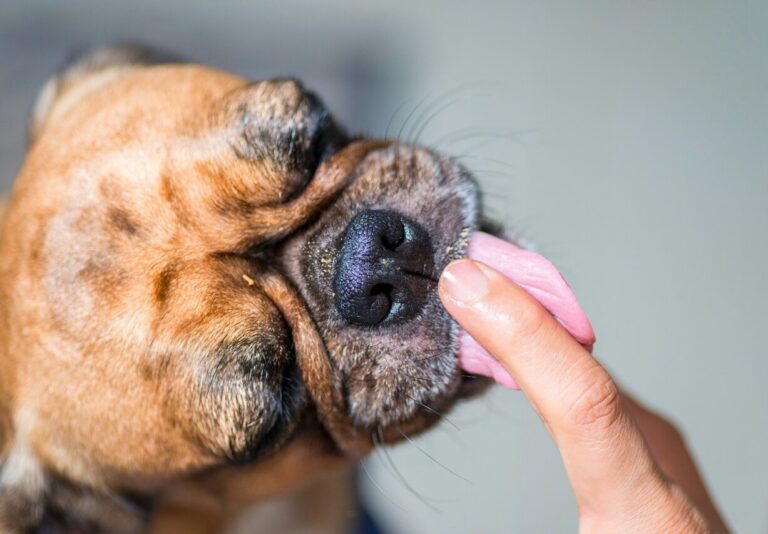
If there’s one thing dogs do that can feel both sweet and slightly questionable, it’s the hand licking.
One minute, everything is chill. And then suddenly there’s a warm, sandpapery tongue going on your fingers like your hand is the world’s most delicious thing.
And you’re sitting there thinking, is this love? Is this a hint? Is my dog trying to communicate something?
Honestly, it can be a bunch of things. So let’s see what’s actually going on when your dog keeps licking your hands.
First, the obvious: hands taste interesting
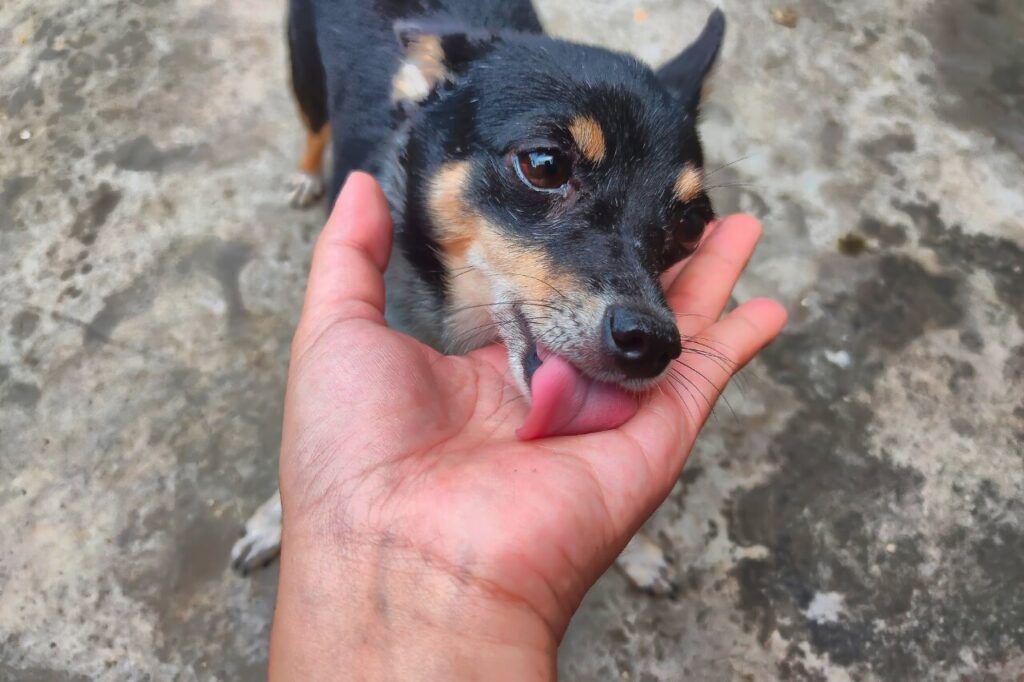
This is the least romantic explanation, but it’s real. Hands taste like everything.
Salt. Lotion. Soap. That random snack you ate while scrolling. Maybe you peeled an orange. Maybe you touched a bit of cheese.
Dogs notice it all. Don’t forget that smell and taste are super important to them.
So sometimes the licking is not emotional at all; they might just like the flavor, even though this is not the most common reason why they do it.
Affection in dog language
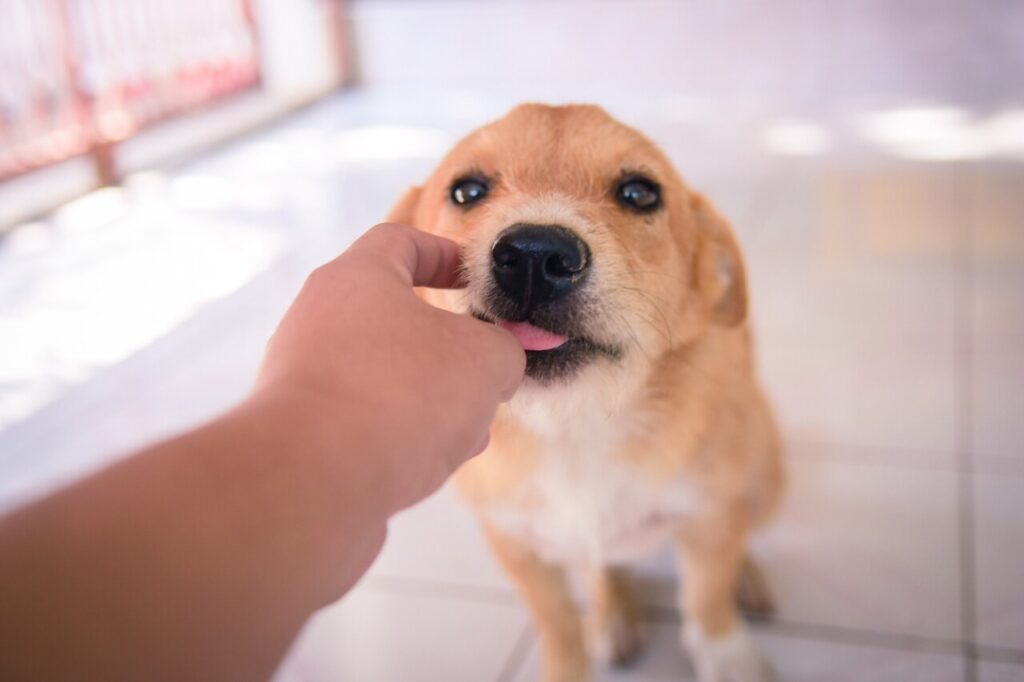
A more common reason why your dog may lick your fingers is to show you affection, especially if you are particularly attached to each other.
Dogs can’t hug like humans. They can’t say “love you” with words. They do it with closeness, leaning on you, following you around, and licking.
A lot of dogs lick hands the way they might lick another dog’s face. It’s bonding. It’s friendly. It’s comfort.
In this case, you should also notice soft eyes, a relaxed body, and maybe a little tail wiggle.
Request for attention
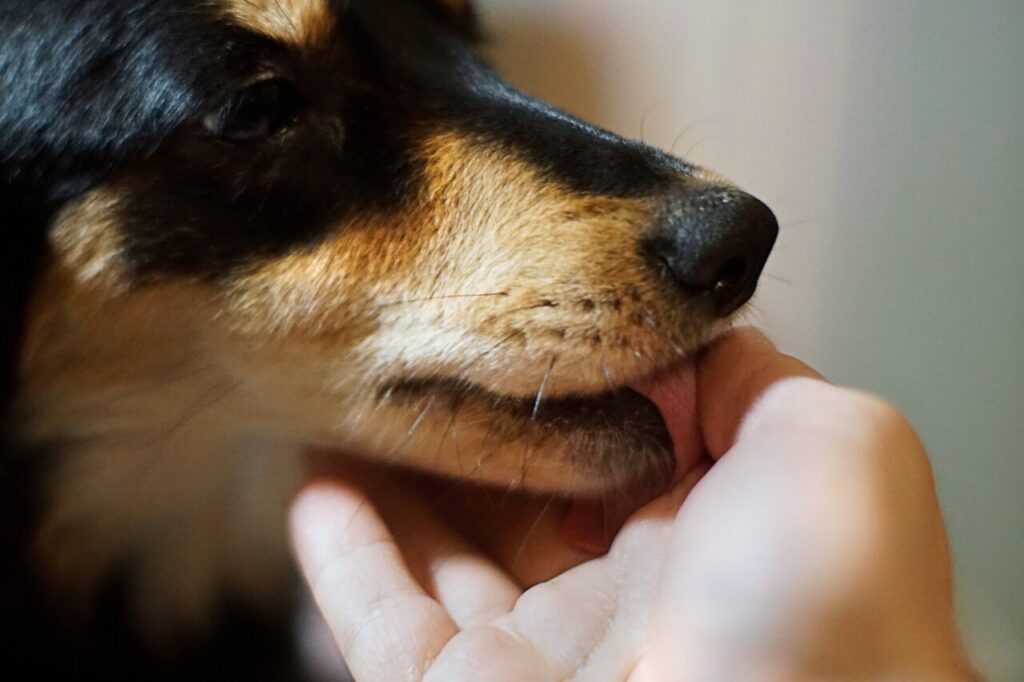
Sometimes licking can also be your dog’s version of tapping your shoulder.
It’s not as obvious as barking, just quietly insisting.
If your dog licks your hands when you’re on your phone, working, or ignoring them, it can be attention seeking behavior.
That usually works because it’s hard to ignore and, since dogs learn fast, if licking gets a reaction, they’ll do it again.
Stress and self soothing

This is where it gets a bit more meaningful.
Licking can be calming for dogs because it’s repetitive and it releases endorphins.
So if your dog starts licking more during thunderstorms, when guests come over, after a big change in routine, or when they seem a bit on edge, it might be them regulating their feelings.
Some dogs do it when they’re unsure. Like they want comfort. Like they’re saying, “Everything is fine, right. Tell me everything is fine.”
I respect you and I’m not a threat
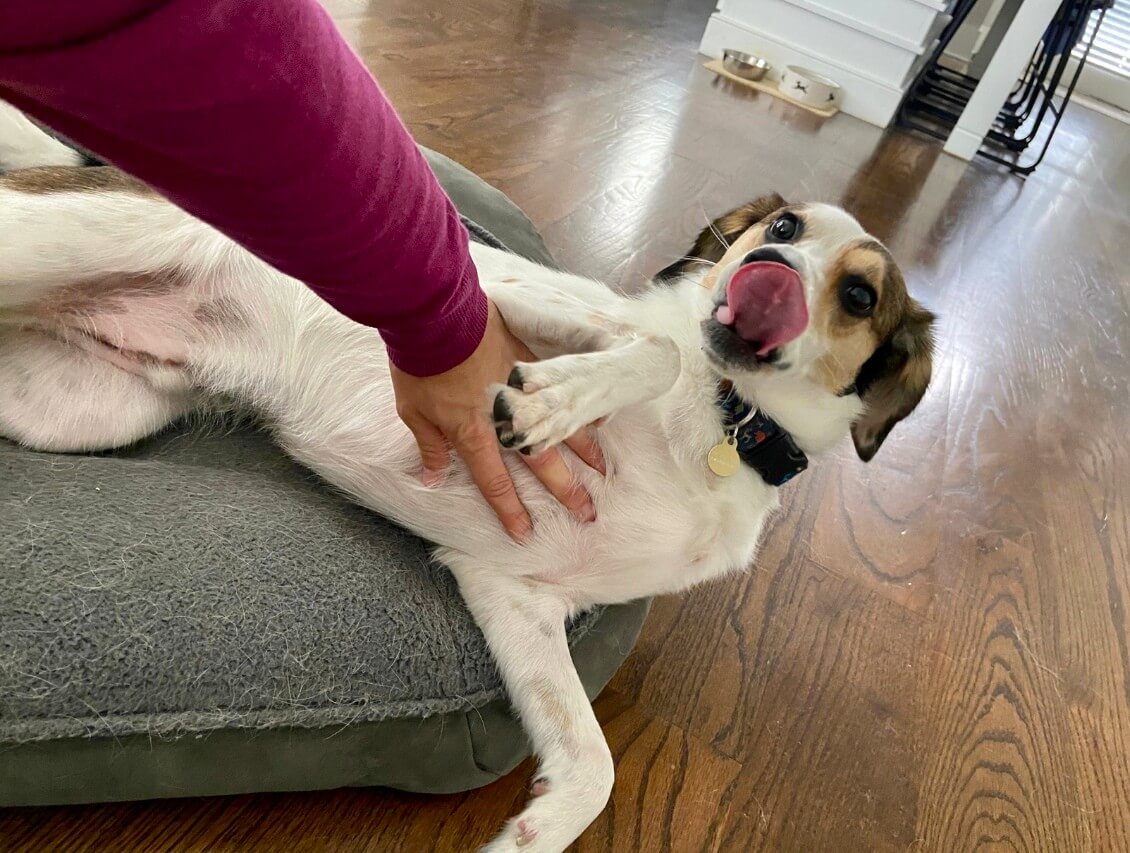
This one is subtle, and it depends on the dog, but licking can also be a social signal.
In dog communication, licking can mean appeasement. It’s a way of saying I’m friendly and I’m not challenging you.
Puppies do it to adults. Dogs sometimes do it to humans in situations where they feel a bit uncertain.
If your dog licks when they’ve been told off, or when they’re in a new environment, or when you’re doing something they’re not sure about, that could be what’s happening.
They’re checking in on you
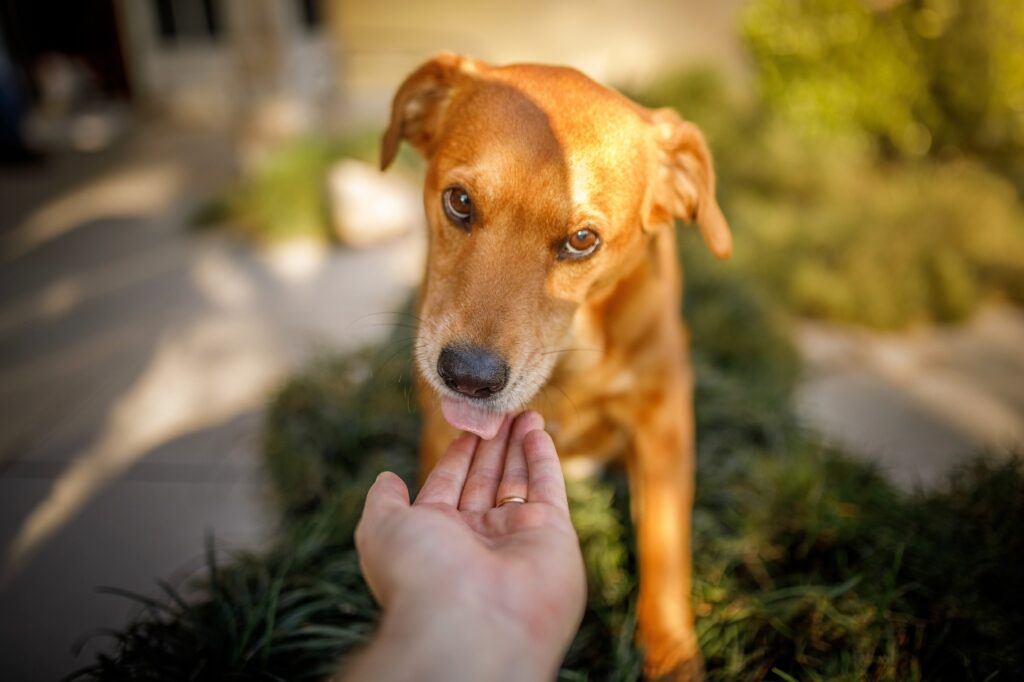
Dogs are ridiculously good at noticing tiny changes.
If you’re stressed, sweaty, upset, sick, crying, or anxious, your body chemistry could shift and your scent could shift.
Some dogs lick hands more when their person is emotionally off. It’s attention and sensitivity built into them.
It can be comforting. Slightly annoying when you’re trying to be in peace. But still sweet, and it shows your dog really cares about you.
It can become a habit, like a nervous tic
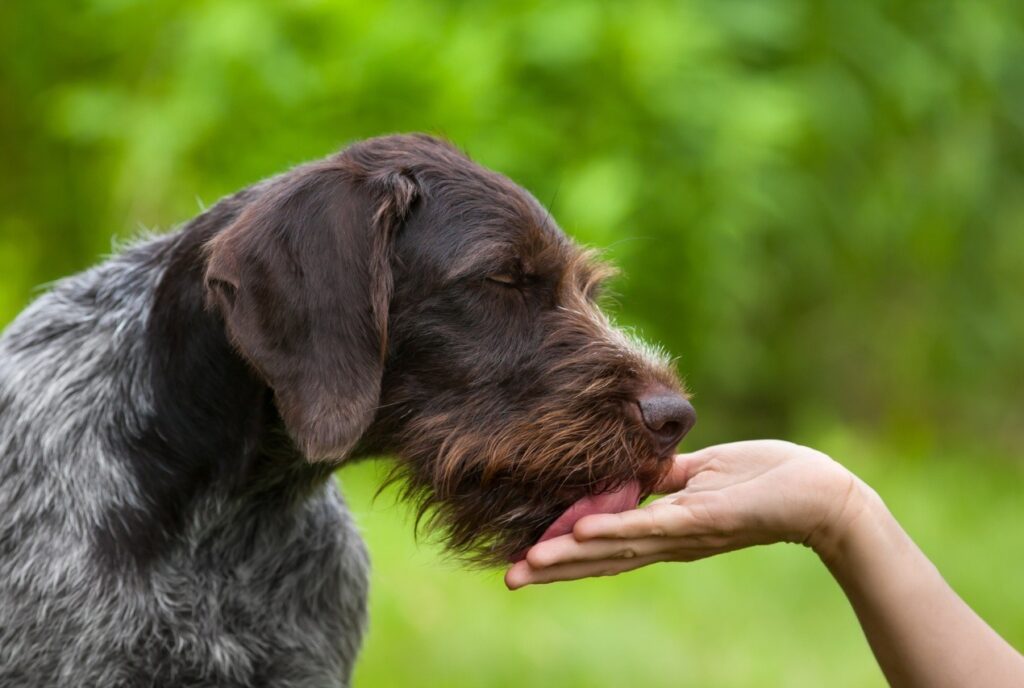
The last thing that could happen is that the licking starts for a reason and then keeps going because it becomes a routine.
Remember that some dogs are more prone to repetitive behaviors, especially anxious dogs, high energy dogs, or dogs who don’t get enough enrichment.
They need more mental activity, more chewing, more sniffing, more structured play.
Licking can be a sign that their brain is looking for something to do.
When it’s too much
Hand licking is usually harmless, but there are times it’s worth paying attention.
If your dog suddenly starts licking obsessively, or they can’t stop, or they lick so much they start panting, whining, pacing, or seem agitated, it can be stress-related or even medical.
Also if licking comes with other changes like reduced appetite, vomiting, diarrhea, restlessness at night, or they start licking other surfaces constantly, that’s when I’d loop in a vet.
Not trying to scare anyone, it is rare but can happen, although in most cases, it is nothing to worry about.
So what should you do about it
Depends on what your dog is saying.
If it’s affectionate and occasional, enjoy it. Wash your hands after, sure. But it’s basically a love sign.
If it’s attention-seeking and it’s driving you crazy, try this:
- Don’t reward the licking with immediate petting or talking
- Redirect with a toy, a chew, or a quick training cue like “sit” then reward that
- Give attention before they demand it sometimes. A short play session can go a long way
If it seems stress-based:
- Keep routines steady when possible
- Add calming activities like sniff walks, lick mats, slow chewing
- Create a safe space at home where they can decompress
- Avoid doing these things that dogs hate
And if the licking is constant, intense, or new, keep an eye on patterns and talk to a professional if needed.